ART 115 01 3957 (Tuesday
and Thursday) 1:00-3:50 pm
Beginning Drawing
Professor David Zeggert
SUNY Broome Community College
607
768 3868 call until 9pm, excluding Sundays
Office hours will be
posted at room 205 Old Science Building
Course Description:
Drawing as an art form that engages us emotionally and intellectually and is considered a form of visual communication. In addition, it has been used as an expressive medium, as well as a medium to examine subjects and document events throughout history.
This course will explore the foundation of drawing; we will study value, structure, light source, form, line, and composition. You will have the opportunity to draw from life (on location) and from observation. Through the physical act of drawing, and in the context of picture making, you’ll begin to learn how to see and understand what you are seeing.
Graphite techniques will be investigated in order to study still life, portrait and the figure, resulting in solid drawings that exist as a drawn image. This class will employ innovative exercises that will stimulate new ideas and approaches, plus study different kinds of marks used when creating drawings, including gesture drawing and renderings. We will examine historical examples to help establish a contextual point of view and provide a point of departure and as a source to frame a discussion.
Reportage: https://www.metmuseum.org/art/collection/search/349139
Kollwitz: https://www.moma.org/s/ge/collection_ge/artist/artist_id-3201_role-1_sov_page-2.html
Collins: https://jacobcollins.format.com/drawing
Drawing as an art form that engages us emotionally and intellectually and is considered a form of visual communication. In addition, it has been used as an expressive medium, as well as a medium to examine subjects and document events throughout history.
This course will explore the foundation of drawing; we will study value, structure, light source, form, line, and composition. You will have the opportunity to draw from life (on location) and from observation. Through the physical act of drawing, and in the context of picture making, you’ll begin to learn how to see and understand what you are seeing.
Graphite techniques will be investigated in order to study still life, portrait and the figure, resulting in solid drawings that exist as a drawn image. This class will employ innovative exercises that will stimulate new ideas and approaches, plus study different kinds of marks used when creating drawings, including gesture drawing and renderings. We will examine historical examples to help establish a contextual point of view and provide a point of departure and as a source to frame a discussion.
Reportage: https://www.metmuseum.org/art/collection/search/349139
Kollwitz: https://www.moma.org/s/ge/collection_ge/artist/artist_id-3201_role-1_sov_page-2.html
Collins: https://jacobcollins.format.com/drawing
Course
Objectives:
Achieve sculptural weight and the illusion of depth.
Achieve sculptural weight and the illusion of depth.
Must complete all assignments.
To learn through exploration, application, analysis of online components and application of the concepts presented. Learning to see, visualize and create with tools/skills acquired in class. In short, hone your skills and become better at the craft of drawing.
Assignments could include drawing, reading, discussion and a critique. We will use a creative process to solve most assignments.
Most classes will be divided into several parts, studio-time, assignments and critique.
Drawing and creating will be at the core of the class with a strong emphasis on mastering the tools of the trade (listed on the supply list).
Introduce and/or refine rendering skills, understanding and stating value, shape, form, achieving this through the use of various exercises.
I expect you to venture from your safe zone, both in ideas and technique. We will critique in class (post) and revisions will be part of the process.
To learn through exploration, application, analysis of online components and application of the concepts presented. Learning to see, visualize and create with tools/skills acquired in class. In short, hone your skills and become better at the craft of drawing.
Assignments could include drawing, reading, discussion and a critique. We will use a creative process to solve most assignments.
Most classes will be divided into several parts, studio-time, assignments and critique.
Drawing and creating will be at the core of the class with a strong emphasis on mastering the tools of the trade (listed on the supply list).
Introduce and/or refine rendering skills, understanding and stating value, shape, form, achieving this through the use of various exercises.
I expect you to venture from your safe zone, both in ideas and technique. We will critique in class (post) and revisions will be part of the process.
Learning
Outcomes:
Investigate subjects, mentally process and restate in a drawn form.
Apply the creative process to explore ideas and the development of an idea.
Discover drawing as an expressive art form.
Develop eye-hand facility and the ability to judge.
Utilize the elements and principles of design.
(Line, Shape, Value, Texture, Color / Light, Text, Balance, Unity, Rhythm, Repetition, Variation, Pattern).
http://char.txa.cornell.edu/language/introlan.htm
Explore graphite and charcoal (optional) as a medium to establish value and depth.
Implement concepts of visual representation
(composition, drawing, value contrast, value transitions, tone).
Solve compositional problems (appropriately compose a picture so that it advances the idea of the drawing).
Implement various drawing techniques and methods of picture making.
Recognize notable contemporary and historical artists/drawers.
Apply knowledge acquired in relation to drawing and as a foundation to other art forms and visual disciplines.
When you have completed the course you will:
Understand drawing as a medium that communicates, have acquired the basic skills that provide a strong drawing foundation, explored various media, be familiar with past and present artists/drawers, become a member of a very prestigious drawing tree.
Expectations:
You are expected to positively participate and engage with the class, improve your skill level, and apply yourself. You’re expected to be creative thinkers, problem solvers and resourceful. In addition, you are expected to complete drawings, quizzes/test, postings, and complete a final project.
Grading:
The bulk of your grade will be based on the major assignments. I expect and anticipate improvement this semester, no matter what your skill level is at the beginning of the term, you will be evaluated on improvement, engagement and effort. In addition, you will be evaluated on your ability to retain course material.
Investigate subjects, mentally process and restate in a drawn form.
Apply the creative process to explore ideas and the development of an idea.
Discover drawing as an expressive art form.
Develop eye-hand facility and the ability to judge.
Utilize the elements and principles of design.
(Line, Shape, Value, Texture, Color / Light, Text, Balance, Unity, Rhythm, Repetition, Variation, Pattern).
http://char.txa.cornell.edu/language/introlan.htm
Explore graphite and charcoal (optional) as a medium to establish value and depth.
Implement concepts of visual representation
(composition, drawing, value contrast, value transitions, tone).
Solve compositional problems (appropriately compose a picture so that it advances the idea of the drawing).
Implement various drawing techniques and methods of picture making.
Recognize notable contemporary and historical artists/drawers.
Apply knowledge acquired in relation to drawing and as a foundation to other art forms and visual disciplines.
When you have completed the course you will:
Understand drawing as a medium that communicates, have acquired the basic skills that provide a strong drawing foundation, explored various media, be familiar with past and present artists/drawers, become a member of a very prestigious drawing tree.
Expectations:
You are expected to positively participate and engage with the class, improve your skill level, and apply yourself. You’re expected to be creative thinkers, problem solvers and resourceful. In addition, you are expected to complete drawings, quizzes/test, postings, and complete a final project.
Grading:
The bulk of your grade will be based on the major assignments. I expect and anticipate improvement this semester, no matter what your skill level is at the beginning of the term, you will be evaluated on improvement, engagement and effort. In addition, you will be evaluated on your ability to retain course material.
Midterm
meeting:
If
needed, we will review your progress and areas to improve.
Classroom grade:
The classroom grade equals four categories
based on expectations. The categories are 25 points each. It will be factored
with your project grades at the midterm and/or the end of the semester. You
will complete four or five projects so this grade does carry weight, (i.e., if
your facilities are not as developed as others the classroom grade may help
boost your overall grade).
Midterm:
At the instructor’s discretion, we will review your progress, areas to
improve and attendance.
College
policy on academic dishonesty:
In BCC’s 2011 Student Handbook starting on #155; see #156 for paragraph beginning: “Academic dishonesty (such as cheating and plagiarism)…” Each student is expected to do his or her own work unless that particular assignment was clearly designated as a group project. Direct copying of files from Internet or from another student is forbidden. If you use the Internet for written or visual assignments indicate on your paper the source of your information. If you are paraphrasing something the Instructor said, simply indicate on your paper that is where the information came from. The sharing of ideas is encouraged, but direct copying of written or visual content is considered cheating. It is the responsibility of every student to safeguard his or her work so that it is not available to other students to seize.
In BCC’s 2011 Student Handbook starting on #155; see #156 for paragraph beginning: “Academic dishonesty (such as cheating and plagiarism)…” Each student is expected to do his or her own work unless that particular assignment was clearly designated as a group project. Direct copying of files from Internet or from another student is forbidden. If you use the Internet for written or visual assignments indicate on your paper the source of your information. If you are paraphrasing something the Instructor said, simply indicate on your paper that is where the information came from. The sharing of ideas is encouraged, but direct copying of written or visual content is considered cheating. It is the responsibility of every student to safeguard his or her work so that it is not available to other students to seize.
Projects:
Each assignment will
have different expectations defined that need to be addressed. Some assignments
will be written; some will be articulated, requiring you to take notes, some
will have conceptual demands. Others might have skill demands and others may
have a deadline demand. You’ll be graded on the aspects of each assignment as
it applies, similar to the point system mentioned above. The project grade and
classroom grades will equally factor in to make up your final grade.
Lateness:
This is critical,
simply put, if you miss a deadline, you could lose 50 points off the final
grade. Defined, the project needs to be complete at the start of the class the
day it’s due, no exceptions, unless noted.
Attendance:
I will give you two
unexcused absences. The third miss is an automatic failure. The attendance
policy is a no tolerance policy. Chronic lateness may add up to an unexcused
absence.
If you have perfect
attendance you will be curved up to the next letter grade.
If you miss a class
it becomes your responsibility to get the information from that class. I
suggest you make arrangements with another student. I’m not going to use class
time to bring you up to date.
If life interrupts
your school schedule, let me know and we can make arrangements. You must
complete all assignments to pass this course. Don’t abuse this privilege. We
will go over absences at the mid-term meeting but,
YOU ARE RESPONSIBLE
FOR KEEPING TRACK OF the classes you missed.
Remember not to make
appointments during class time.
You are expected to
remain in the classroom for the entire class period, unless other instruction
is given, leaving early is considered being absent.
Studio Rules
Students must clean
their work areas before leaving the studio.
That includes putting away easels, palettes, and other equipment.
Students should clean
their palettes, boards and tables at the end of a class or work session.
DO NOT TOUCH THE
STILL LIFE SET UPS!
No work or personal
property may be left behind after the term is over with the expectation that it
will be stored or kept by the department.
Online component: Links
of interest
This is required. Students
are required to e-mail me at: Zeggertdp@sunybroome.edu
By sending me your email address, if needed, it allows me to develop an email group of the class members to be used for updates and/or inform of a class cancellation.
By sending me your email address, if needed, it allows me to develop an email group of the class members to be used for updates and/or inform of a class cancellation.
Email should include biographical information.
Listed below are
several sites of interest, during the semester, I’ll email you more links
relative to what we are studying at the time.
Students will be
required to visit the following web sites below.
Your success is my
goal!!!
Supplies:
Light source:
Clamp
light can be purchased at Lowes
Natural light bulb,
60 watt or above
(consider a variety
pack including various wattage bulbs)
Folder:
Used to organize
handouts and notes
DATE week 1 CONTENT
Class 1
Class 1
Introduction, cover
syllabus, complete bios., course overview
HW:
HW:
Send me your email
address with bio. info., noting Spring Art
115 in the subject line
Order supplies immediately.
Thinking about Drawing
Select a drawing from http://www.metmuseum.org/ print the image and be prepared to discuss the work and artist.
Objective and format:
Select a drawing from http://www.metmuseum.org/ print the image and be prepared to discuss the work and artist.
Objective and format:
Summarize your
thoughts in a typed statement, at least 300 words to be handed in for a grade.
In the context of Thinking about Drawing discuss in your statement the Importance, Interest and the overall Impact of the drawing. Be thoughtful and expressive in your rationale, rely on your intuition, don’t censor yourself, include what you discovered from the drawing such as aesthetic, composition and light source, and/or describe your initial response to the work and why you selected the work.
In the context of Thinking about Drawing discuss in your statement the Importance, Interest and the overall Impact of the drawing. Be thoughtful and expressive in your rationale, rely on your intuition, don’t censor yourself, include what you discovered from the drawing such as aesthetic, composition and light source, and/or describe your initial response to the work and why you selected the work.
(include a print out
of the image- it should be printed on a separate sheet of paper allowing us to
start the critique process)
DATE week 1 CONTENT
Class 2
Crit., hand in
statement and color proof for a grade
HW assignment:
Discover drawing produce (out of studio exercise)
Week 2 CONTENT
Class 1
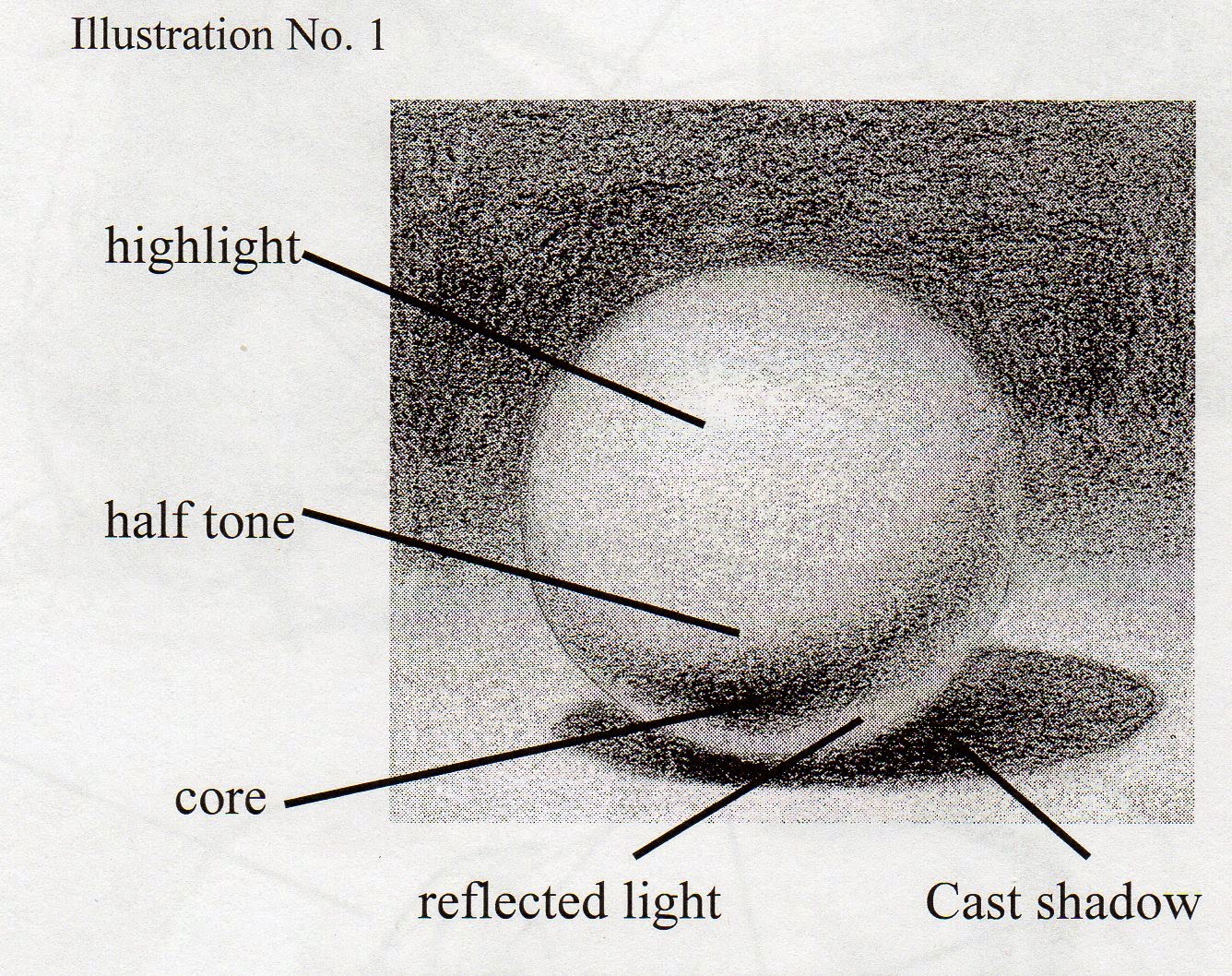
Begin Value, lighting
& general concepts and definitions discussed
Value sphere
exercise, in studio and/or value string, scale 0-11 in studio
Next class: Studio
exercise: small still life, establish form
Continue to read
research and investigate links
(Supplies due for a grade) Due: 02/06
(Supplies due for a grade) Due: 02/06
Class 2
Studio still life, establish form using fruit and items as the subject
Studio still life, establish form using fruit and items as the subject